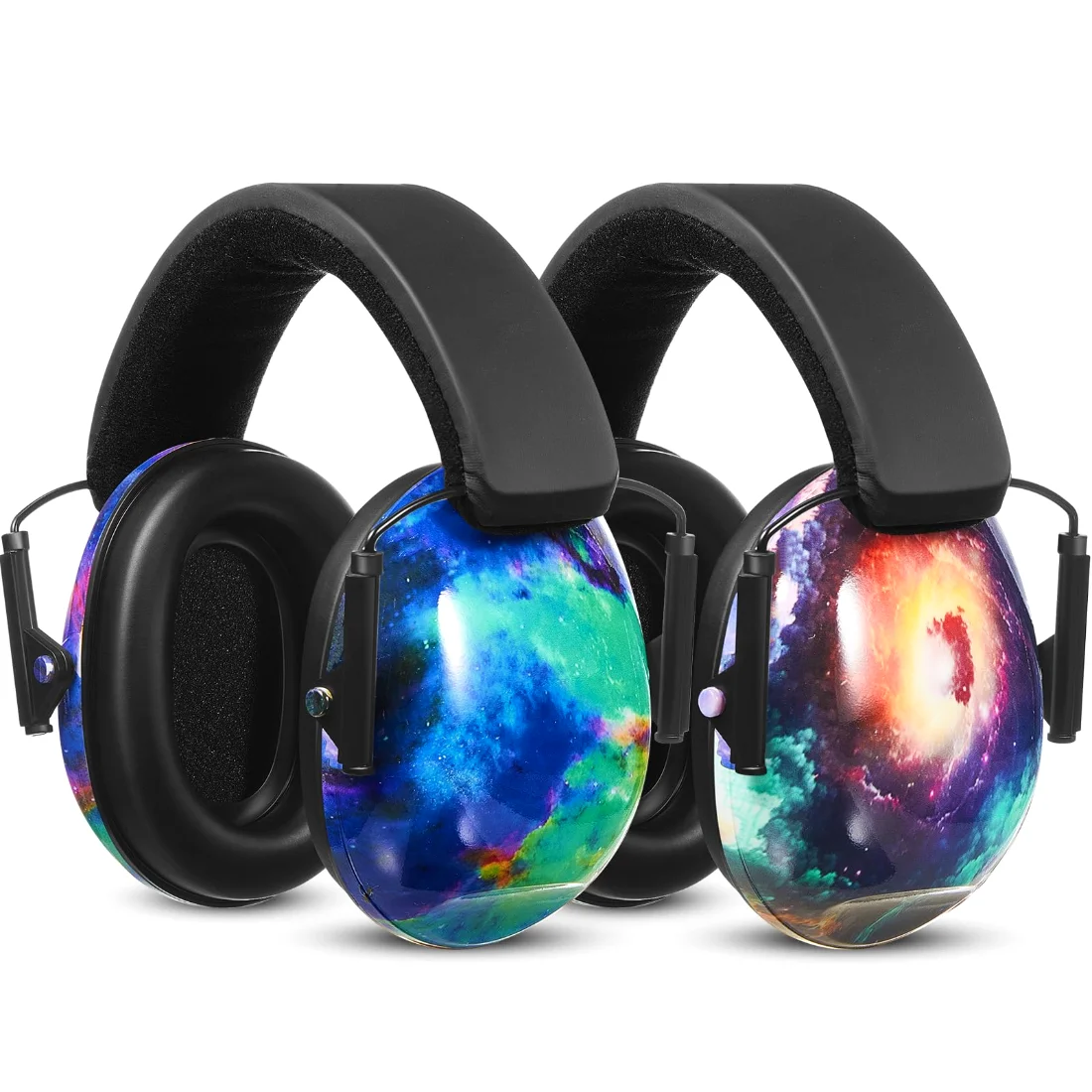
The number on the box is a laboratory noise reduction rating
The figure printed on a box of ear muffs is a noise reduction rating measured in a laboratory. It is the result of a controlled test where cups are fitted to a head form under specific conditions. That laboratory number gives you a benchmark for comparison between products. It is not a promise of a fixed decibel drop for every child in every situation.
Lab tests use a fitted condition to measure the maximum achievable reduction. Real life differs. How the cups sit on the head, the way hair or headbands sit beneath the pads, and movement while the child is wearing them all change the sound reduction you actually get. The manufacturer measures the rating in the lab, and the figure on the box reflects that controlled setting rather than classroom wear.
Amylove ear muffs are passive. That means two padded cups on a sliding band, no electronics and no batteries. The band folds flat and the cups swivel. Those features help you store the muffs and adjust fit, but they do not change the fact that fit matters for performance.
When you read the number, use it as a comparative tool. Compare different boxes to see which one has a higher laboratory rating. Then plan to test the fit on a child or a few children in the actual setting where they will be used. Practical fit checks will tell you how close real wear comes to laboratory expectations.
The number does not tell you comfort, fit, or suitability for a child
A laboratory rating cannot tell you whether a pair will stay on a particular child during play or whether the pads will feel comfortable after twenty minutes. The box number is a single measure taken under fitted, controlled conditions. Comfort, shape of head, hair, hats, and how a child moves are all factors the laboratory does not measure.
Do not assume the rating indicates that ear muffs are suitable for any individual child. The rating does not address sensory preferences, anxiety, or any developmental needs. It does not mean the muffs treat a condition, and it does not substitute for professional advice when a child has specific medical or developmental needs. Where guidance on noise levels is needed, name the body that made the guidance. The National Institute on Deafness and Other Communication Disorders states that sounds at or above 85 dBA can cause hearing loss if exposure is long or repeated, and that sounds at 70 dBA or below are generally safe even over long periods. The Centers for Disease Control and Prevention advises keeping a child away from high noise levels and points readers to the National Institutes of Health for the numbers.
Try a simple wear test before you assign a pair for daily use. Watch how the band sits. A pair that has to be pushed down to sit flat is too large for the head it is on. Swap sizes, patterns, or colours so a child can identify their own pair, and then observe whether they keep the cups over their ears without constant prompting.
Keep the public health sound levels in mind when planning a quiet corner
Public health guidance helps you decide when to introduce ear muffs and when to change the environment instead. The National Institute on Deafness and Other Communication Disorders reports that long or repeated exposure to sounds at or above 85 dBA can cause hearing loss. The same body states that sounds at 70 dBA or below are generally safe even over long periods, and that the louder the sound the less time it takes for damage to happen. The Centers for Disease Control and Prevention recommends keeping a child away from very high noise levels and directs readers to the National Institutes of Health for the numerical guidance.
Use those levels as a practical frame. If you expect a short burst of loud noise, protective devices are mentioned by the NIH as an option during loud activity. If the environment will be noisy for an extended time, consider moving a child to a quieter space or changing the activity. Noise that lasts an entire assembly or a repeated school event is not the same as a one-off loud sound.
When you plan a quiet corner, think about the typical duration and peak level of the sounds the child will face. Pair shortest durations with temporary measures. For longer sessions, reduce the room sound first and then offer ear muffs as an extra layer. This is general information and not medical advice.
How many pairs to have for a register and why pack sizes matter
Start by counting the children who might use the quiet corner on a given day. Order at least one pair per child who may need them during the same period. Amylove packs come in twelves, twenty-fours and thirty-sixes. Single colours help you keep sets uniform. Patterned sets let a child identify a specific pair by look, which can help with hygiene and personal preference.
Add two or three spare pairs to cover the inevitable needs of replacements, transitions, and visitors. Spares let you swap a broken or soiled pair without interrupting the calm you have created. If you share muffs between classrooms or across a year group, choose a larger pack so you do not break the routine by moving items around constantly.
Think about storage at the register point. Store pairs near the quiet corner or classroom entrance so a child can collect a pair on the way in. Keep a simple sign showing where to return them at the end of a session. Label shelves or baskets with year group or table numbers when you use mixed patterns. This visual cue helps children find their own pair quickly and reduces handling.
If you supervise a group activity in a hall, plan movement of pairs. Bring pairs in a folded band position to protect the pads and keep the cups facing upward when you set them down. Rotate boxes when you restock so older pairs are used first. This is general information and not medical advice.
How to check fit so the laboratory rating is closer to what you see in class
Start with the band. The sliding band should be adjusted so the cups sit flush over the ear without forcing pressure that causes discomfort. The cups should make contact around the ear. They must not ride up or be tilted away from the ear. If the child has to push the cups down to make them sit flat, that means the pair is too large for that head.
Use the swivel function to orient each cup so it covers the ear. The pads compress slightly when properly seated. Ask the child to turn their head and walk a few steps while you observe the cups. If the cups shift or gaps appear, try a smaller size or a model with a tighter band. For hair that interferes with the seal, move hair away from the pad edge or try a different hairstyle during wear time.
Teach the child how to put the muffs on and take them off. Practice sessions at low pressure will make real use smoother. Let them hold the band and place the cups over each ear. A child who understands how the cups sit is more likely to wear them correctly without constant help.
If many children will use shared pairs, check fit on a sample of heads that represent the group. Rotate sizes to match frequently. Regularly inspect the pads for wear and replace pairs that compress and no longer make a snug seal. This is general information and not medical advice.
When muffs are the wrong answer and the room itself needs changing
Ear muffs can help in short bursts or when changing the room is not possible. They are not always the right approach. If the whole assembly is loud for a long period or if many children are affected, change the environment first. Move the child to the side of the hall away from speakers. Break a large group into smaller gatherings in quieter rooms. Choose a carpeted classroom instead of a tiled hall when you can. Soft furnishings, curtains, and wall panels reduce reverberation and lower perceived loudness.
If equipment or music causes persistent high sound, speak to the person in charge of the event about lowering the volume or rearranging speakers. The Centers for Disease Control and Prevention advises keeping children away from very loud toys and directs readers to the National Institutes of Health for numeric guidance on safe levels. Where the noise source is constant and unavoidable, plan alternative activities in quieter spaces.
Remember not to treat ear muffs as medical treatment for any condition. They are a tool for reducing exposure to sound in the moment. If you are concerned about a child’s hearing, sensory needs, or safety in noisy environments, consult a qualified professional. This is general information and not medical advice.